
Films by Yoko Ono
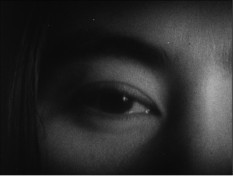
Yoko Ono Fluxfilm No. 9: Eye Blink, 1966. (c) Yoko Ono, courtesy of the artist
Los Angeles Filmforum presents
Films by Yoko Ono
Sunday July 26, 2026, 2:00 pm
At 2220 Arts + Archives, 2220 Beverly Blvd. Los Angeles CA 90057
Tickets: $15 general, $10 students/seniors, free for Filmforum members.
In conjunction with The Broad’s exhibition Yoko Ono: Music of the Mind, Filmforum presents some films of hers not included in the exhibition, along with a couple of her Flux films.
Introduced by Sarah Loyer, curator at The Broad.
We invite you to bring small musical instruments to play along with Film No. 5 (Smile), as Ono and Lennon originally called for in the film’s world premiere in Chicago in November 1968.
The films of Yoko Ono demand that one slows down to view them. They might be humorous or rarified, reserved or unruly, precise or uncontrolled. Plot is not important; the idea behind them is, and calls for absorption in the space and time to look closer, perhaps to meditate or to dream. While a few of these are installed in the exhibition at The Broad and others are not, the opportunity to sit with them in full in a darkened room allows the possibility of a full appreciation.
“All Ono’s films are fundamentally conceptual, and are characterized by the same concerns that underpin her work in other media: the body, duration, ephemerality, seriality, measurement, language, an active engagement of the viewer as participant, a performative structure, attention to the properties of the material, and a break with the autonomous work of art. Many of these tenets later characterized both Conceptual Art and structural film for which Fluxus film is now acknowledged as an important precursor. In 1961, the Fluxus artist Henry Flynt wrote a definitive essay, “Concept Art,” in which he gave the first definition of Conceptual Art; terming it ‘concept art’ and ‘structure art,’ he linked it to the principles of experimental music being established by composers uch as La Monte Young, with whom Ono was presenting concerts in her Chambers Street loft the year Flynt’s text was written” – Chrissie Iles, “Erotic Conceptualism: The Films of Yoko Ono,” in Yes Yoko Ono (Japan Society & Harry N. Abrams, 2000), p. 202.
Yoko Ono (b. 1933, Tokyo) is an artist, musician, and activist whose work has shaped contemporary art and culture for more than seven decades.
After moving to New York in the 1950s, Ono established herself within New York's artistic and musical communities. During the 1960s, she lived and worked in New York, Tokyo, and London, creating works including Cut Piece (1964) and her foundational book of instructions Grapefruit (1964).
In 1969, she married John Lennon, with whom she collaborated extensively in art, music, film, and peace activism. She has also released numerous solo and collaborative recordings, including the 1981 Grammy Award-winning Album of the Year, Double Fantasy.
In 2009, she received the Golden Lion for Lifetime Achievement at the Venice Biennale. Her work has been the subject of major solo exhibitions at institutions including MoMA, Tate Modern, Museum of Contemporary Art Tokyo, the Louisiana Museum of Modern Art, and The Broad, and continues to be exhibited internationally.
Sarah Loyer is Curator and Exhibitions Manager at The Broad, Los Angeles where she curated The Broad’s presentations of Yoko Ono: Music of the Mind (2026). Loyer has organized exhibitions of artists Joseph Beuys, Jeffrey Gibson, and Keith Haring, as well as thematic shows This Is Not America’s Flag (2022) and The Broad’s presentation of Soul of a Nation: Art in the Age of Black Power 1963-1983 (2019), for which she received a Curatorial Award for Excellence from the Association of Art Museum Curators. In 2024, Loyer organized the reforestation project Social Forest: Oaks of Tovaangar, planting over 100 native oak trees in public spaces as an action toward environmental and social repair. Loyer has a master’s degree in public art studies from the University of Southern California and a BA in media studies and cultural studies from The New School.
Special Thanks to Ed Patuto, The Broad, Connor Monahan, Yoko Ono’s Studio
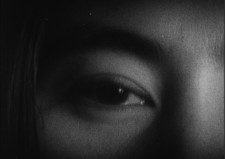
Fluxfilm No. 9: Eye Blink, (c) Yoko Ono, courtesy of the artist
Fluxfilm No. 9: Eye Blink
Yoko Ono
1966, b&w, silent, 35 sec.
“Yoko Ono’s work belongs to Fluxus’ anti-spectacular tendency, extolling daily life in its most trivial and fleeting manifestations by concentrating on random insignificant events. ‘Di it yourself’ pieces such as Painting to Hammer a Nail in and Cleaning Piece (both 1961) demand active participation from the viewer; a similar interactivity is implied in her films.”
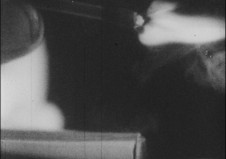
Fluxfilm No. 14: aka No. 1: Match, (c) Yoko Ono, courtesy of the artist
Fluxfilm No. 14: aka No. 1: Match
Yoko Ono
1966, b&w, silent, 5 min.
“This film reproduces Yoko Ono’s action, Lightning Piece (1955), in which a match was struck and allowed to burn all the way down. Like Eye Blink (fluxfilm #9 and #15), it was filmed with Peter Moore’s high-speed camera [at 2000 frames per second] and projected at normal speed, producing a slow-motion effect by which a ‘transubstantiation’ occurs: a simple burning match becomes a poetic source of light, embracing the viewers who contemplate it.” – Maeva Aubert, in the notes to the DVD Flux Film Anthology (Re:Voir Video, 2010)
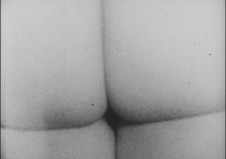
Fluxfilm No. 16: aka No. 4: Bottoms, (c) Yoko Ono, courtesy of the artist
Fluxfilm No. 16: aka No. 4: Bottoms
Yoko Ono
1967, b&w, silent, 6:15
The first version of Bottoms. Filmed by Anthony Cox and Jeff Perkins.
Yoko Ono Film No. 4 script: “String bottoms together in place of signatures for petition for peace.”
“Ono filmed the naked buttocks of a group of Fluxus artists and friends, including Geoffrey Hendricks, Carolee Schneemann, James Tenney, and Ben Patterson, as they walked.
“The rebellious, erotic, liberatory nature of the film, which reflects the tenor of Fluxus, acts in direct opposition to the nineteenth-century scientific treatment of the body as a ‘dynamic field of action in need of regulation and control.’ – Chrissie Iles, “Erotic Conceptualism: The Films of Yoko Ono,” in Yes Yoko Ono (Japan Society & Harry N. Abrams, 2000), p. 203.
Two Virgins
Yoko Ono and John Lennon
1968, color, sound, 19 min.
Premiered Nov 14, 1968 at the Chicago International Film Festival
Ono and Lennon, superimposed.
Apotheosis
Yoko Ono and John Lennon
1970, color, sound, 19 min.
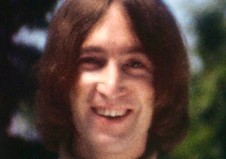
Film No. 5 (Smile)
Film No. 5 (Smile)
Yoko Ono and John Lennon
1968, color, silent, 51 min.
Three minutes of John Lennon smiling slowed down to 51 minutes.
Premiered Nov 14, 1968 at the Chicago International Film Festival, where audience members were invited to bring musical instruments.