
Don’t Think I’ve Forgotten: Cambodia’s Lost Rock’n’Roll
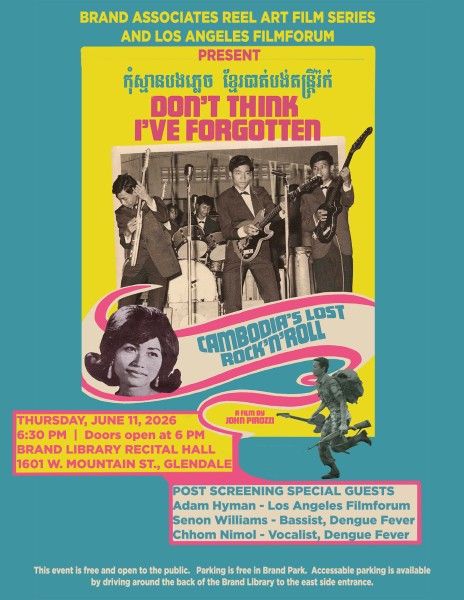
Brand Associates REEL ART Film Series and Los Angeles Filmforum present
Don’t Think I’ve Forgotten: Cambodia’s Lost Rock’n’Roll
June 11, 2026, 6:30 pm
At Brand Library, 1601 W. Mountain Street, Glendale CA 91201
In person conversation after the show with Chhom Nimol and Senon Williams from the band Dengue Fever and Filmforum director Adam Hyman
NOTE THE CHANGE IN DAY, TIME, AND LOCATION
More info: https://glendaleca.libnet.info/event/16104765
Tickets: Free, open to the public with open seating, no reservations. Please aim to arrive at 6 pm when doors open for a better seat.
Free, limited parking is available in Brand Park; ride-sharing is strongly encouraged. An accessible entrance and accessible parking for cars with a disabled parking placard or license plate is located on the East side of Brand Library.
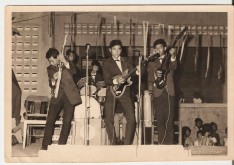
Through the eyes, words and songs of its popular music stars of the 50’s, 60’s, and 70’s, DON’T THINK I’VE FORGOTTEN: CAMBODIA’S LOST ROCK AND ROLL examines and unravels Cambodia’s tragic past. Combining interviews with surviving musicians and never-before-seen archival material and rare songs, the film tracks the winding course of Cambodian music as it morphs into a unique style of rock and roll. A vibrant musical culture that was nearly lost forever under the brutal Khmer Rouge regime is revived and celebrated.
During the 60’s and early 70’s, as the war in Vietnam threatened its borders, a new music scene emerged in Cambodia that took Western rock and roll and stood it on its head – creating a sound like no other. Cambodian musicians crafted this sound from the various rock music styles sweeping America, England, and France, adding the unique melodies and hypnotic rhythms of their traditional music. The beautiful singing of their renowned female vocalists became the final touch that made this mix so enticing.
But as Cambodian society - young creative musicians in particular - embraced western culture and flourished under its influence, the rest of the country was rapidly moving to war. On the left, Prince Sihanouk joined forces with the Khmer Rouge and rallied the rural population to take up arms against the government that deposed him. On the right, the Cambodian military, with American military support, waged a war that involved a massive aerial bombing campaign on the countryside. In the end, after winning the civil war, the Khmer Rouge turned their deadly focus to the culture of Cambodia.
After taking over the country on April 17, 1975, the Khmer Rouge began wiping out all traces of modernity and Western influence. Intellectuals, artists and musicians were specifically and systematically targeted and eliminated. Thus began one of the most brutal genocides in history, killing an estimated two million people – a quarter of the Cambodian population.
DON’T THINK I’VE FORGOTTEN: CAMBODIA’S LOST ROCK AND ROLL tracks the twists and turns of Cambodian music as it morphs into rock and roll, blossoms, and is nearly destroyed along with the rest of the country. This documentary film provides a new perspective on a country usually associated with only war and genocide.
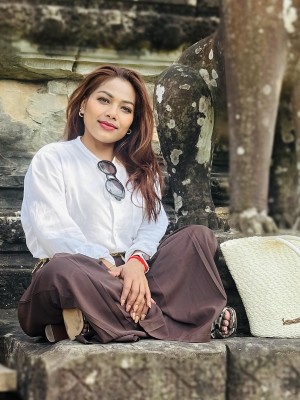
Chhom Nimol is an acclaimed Cambodian vocalist best known as the lead singer of the Los Angeles–based band Dengue Fever. Born in Cambodia, she developed her voice performing traditional and popular songs before relocating to the United States, where her career took an unexpected turn after being discovered by members of Dengue Fever. Singing primarily in Khmer, Nimol brings a striking authenticity and emotional depth to the band’s distinctive sound, which blends 1960s Cambodian rock, surf, and psychedelic influences with modern indie sensibilities.
Her work has helped introduce global audiences to the rich legacy of pre–Khmer Rouge Cambodian music, much of which is explored in the documentary Don’t Think I’ve Forgotten: Cambodia’s Lost Rock and Roll. Through both her recordings and live performances, Nimol plays a vital role in preserving and reimagining this cultural history for new generations. Her artistry bridges past and present, honoring the resilience of Cambodian musicians while contributing to an ongoing revival of the country’s musical heritage.
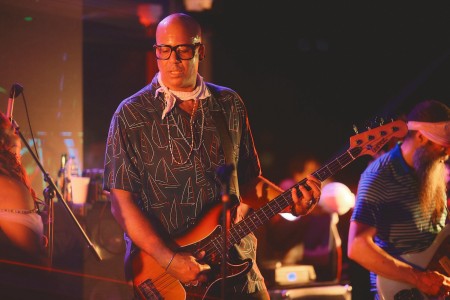
Senon Williams is an artist and musician from Los Angeles, best known as the longtime bassist for the psych-rock band Dengue Fever, which he helped found and has played with since its start in the early 2000s, he helped shape its musical evolution. In Dengue Fever, Williams has toured internationally, including Cambodia, contributed to the band’s distinctive blend of 60’s-70’s Cambodian, garage and psych rock with eclectic sounds from around the globe. Senon also appeared in the documentary film Sleepwalking Through the Mekong, also directed by John Pirozzi, which chronicles Dengue Fever’s historic tour of Cambodia in 2005.Alongside his music career, Williams is a prolific visual artist working in ink, watercolor, acrylic, sculpture, and text-infused imagery. His art often explores human struggle, history, and existential themes. He has published artist books and zines, and exhibits in museums, galleries and hosts public events internationally that merge narrative and visual thought.
Adam Hyman has, since 2003, been the Executive Director and Head Programmer for Los Angeles Filmforum, the city’s longest-running screening organization for experimental film and video art, documentaries, and animation, and received a Special Citation from the Los Angeles Film Critics Association in 2025 for that work. He is also a documentary filmmaker, producing and/or writing and/or doing archival and clearance work on a variety of historical, archaeological, political, and music documentaries that have aired on PBS, the History Channel, CNN, and others. He co-produced the Oscar-nominated feature documentary Operation Homecoming: Writing the Wartime Experience.
Dengue Fever is an American band from Los Angeles who combine Cambodian rock and pop music of the 1960s and 70s with psychedelic rock and other world music styles. Their most recent album, Ting Mong, was released in September 2023.
Special thanks to Jim Browne, Argot Pictures; Arlene Vidor
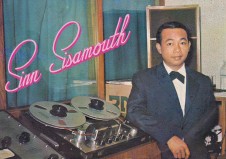
Don’t Think I’ve Forgotten: Cambodia’s Lost Rock and Roll
Don’t Think I’ve Forgotten: Cambodia’s Lost Rock and Roll
Directed by John Pirozzi, USA/Cambodia, 2014, digital, color and b&w, sound, 106 min.
In English, Khmer, and French with English Subtitles
Distributed by Argot Pictures
DIRECTOR’S STATEMENT
I knew from the beginning that I wanted the film to reflect the wide range of artists/music that was Cambodia’s popular music scene during the 60’s and 70’s. As we began collecting music it became apparent that there were many artists with their own unique styles making large quantities of high quality music. The problem was there was nowhere to turn for information about them - no books, no magazine articles, no primary research material. Nothing.
I started with a handful of singers’ names and began interviewing people whose recollections were foggy at best. They had gone through incredible hardships, suffering through a harsh civil war and then the brutal Khmer Rouge era where their very identities had nearly been erased. It took shooting 75 interviews in 4 countries to be able to piece this story together.
On the surface there was very little visual representation of Cambodia’s golden era, as it has come to be known, to be found. It’s astounding to think that most of the archival material detailing this crucial period of Cambodian history had been destroyed.
So finding the necessary materials needed to tell this story became a daunting challenge. Many people, who care deeply about Cambodia and its popular music, began to surface with bits and pieces of the puzzle. Meeting so many of these generous people and collaborating with them became a big part of the process. It’s something that I feel very fortunate to have experienced. - John Pirozzi, 2014